First, stop and get it checked
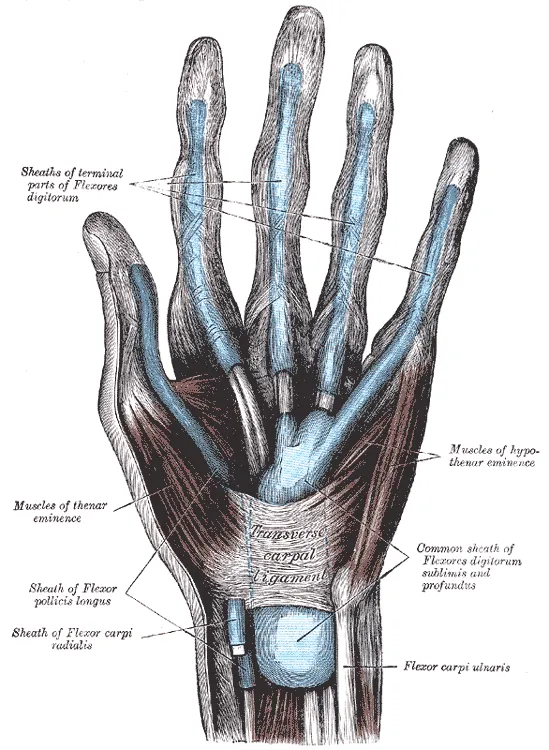
If you felt or heard a pop in a finger, if it swells, or if it goes numb or tingles, stop climbing on it and see a physio or a doctor before you log anything else. A sudden pain with a pop followed by swelling is how acute pulley tears are often described (Berrigan et al. 2022), and only an examination can say what it is.
Log where it is
In Ascent, open Body and tap Log new. Pick where it hurts from 18 body regions, which follow the body areas sports medicine uses to record injuries (IOC consensus 2020). For Hand and fingers, pick which finger.
Give it a name if you like, and set it to Active while it limits your climbing, or Watching while you keep an eye on it.
The details your physio gives you go under Physio details: the structure, if they named one (an A2 pulley, say), the severity, your next appointment and their note. The structure list starts with "Not sure / not diagnosed", and Ascent never guesses one from what you type.
Log pain the same way every day
Pick a number from 0 to 10, once a day, at about the same time and after the same kind of day. Consistency matters more than the number: a 3 that means the same thing every morning tells you more than a careful 4.5 once a week.
Pain today
Logged 2/10
While an injury is active, Ascent can remind you in the evening if you haven't logged pain that day, and Body charts every entry so the trend is plain.
Keep your physio's limits in front of you
- Load rules. Add the limits your physio gives you, like "Max 2 crimpy sessions a week" or "No campus". They count sessions, not climbs, and Body shows how many uses each rule has left this week. Delete the rule when your physio clears you.
- Rehab. Add the exercises your physio set, with their dose, and tick them off as you do them. Ascent shows how many of the last 7 days you did them. It never writes, doses or progresses a rehab exercise.
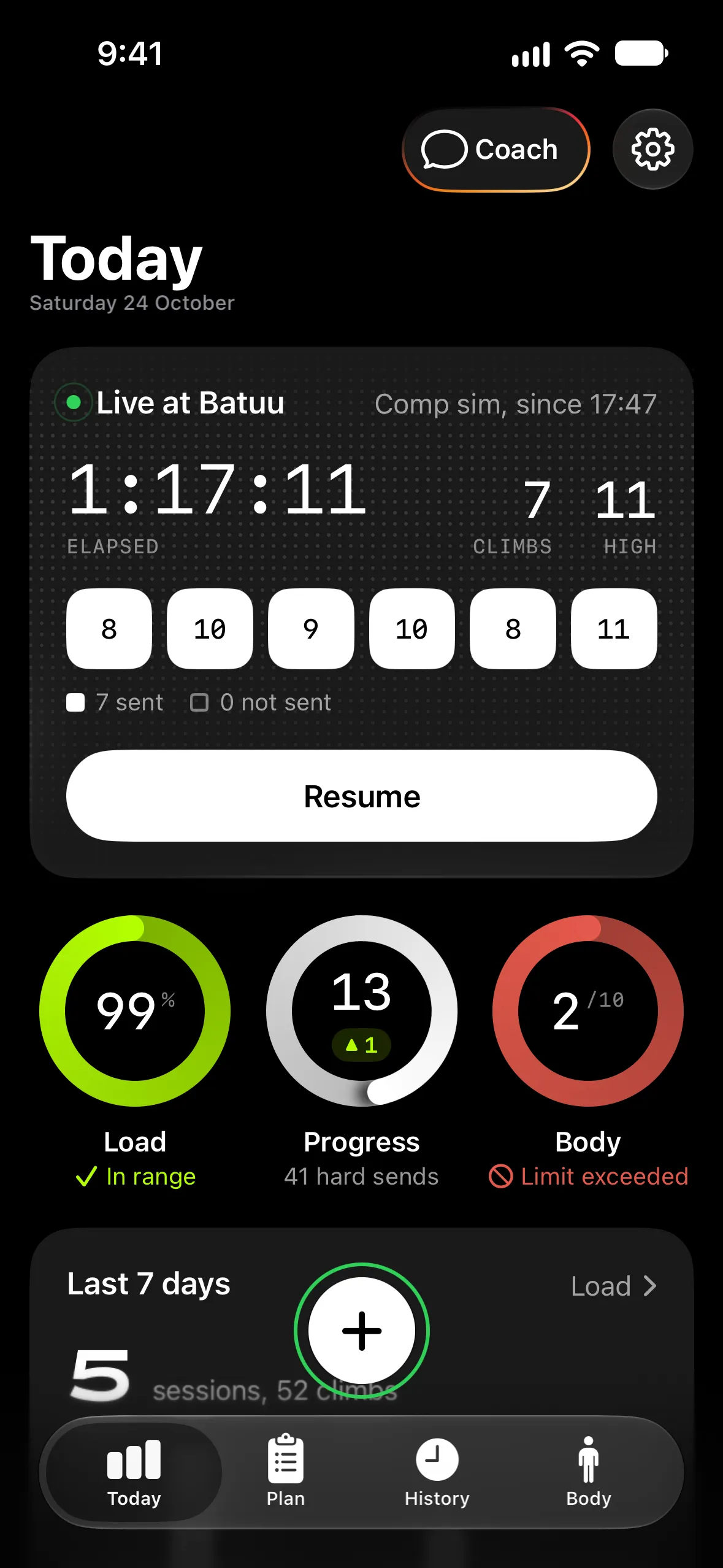
- The Body ring. On Today it shows your latest pain and your rehab days. It turns red when a rule is used up for the week, and amber when pain has gone up or a rule has one use left.
- Your next appointment. The date and your physio's note sit under the injury, so the plan you agreed is where you climb.

What Ascent does and doesn't do
Ascent records what you tell it and shows it back: pain over time, rules used, rehab done, next to the climbing you logged. It doesn't diagnose, it doesn't give treatment advice, and it doesn't decide when you're ready to climb hard again. That's for you and your physio.
Injuries, pain and rehab stay on your iPhone. They never appear on a share card, and with Ascent Pro they reach the Coach only if you turn on Send Body data, which is off until you do. Privacy.

Reading from climbing medicine
For understanding finger injuries, start with the people who study them. Volker Schöffl's pulley injury grades (Schöffl et al. 2003) and a recent review of pulley injuries (Miro et al. 2021) are both in Ascent's Research library. Two reviews are free to read in full: Crowley 2012 on how the finger pulleys work, and Berrigan et al. 2022 on how pulley injuries are imaged. Hooper's Beta explains climbing injuries in plain words. None of them replaces an examination.