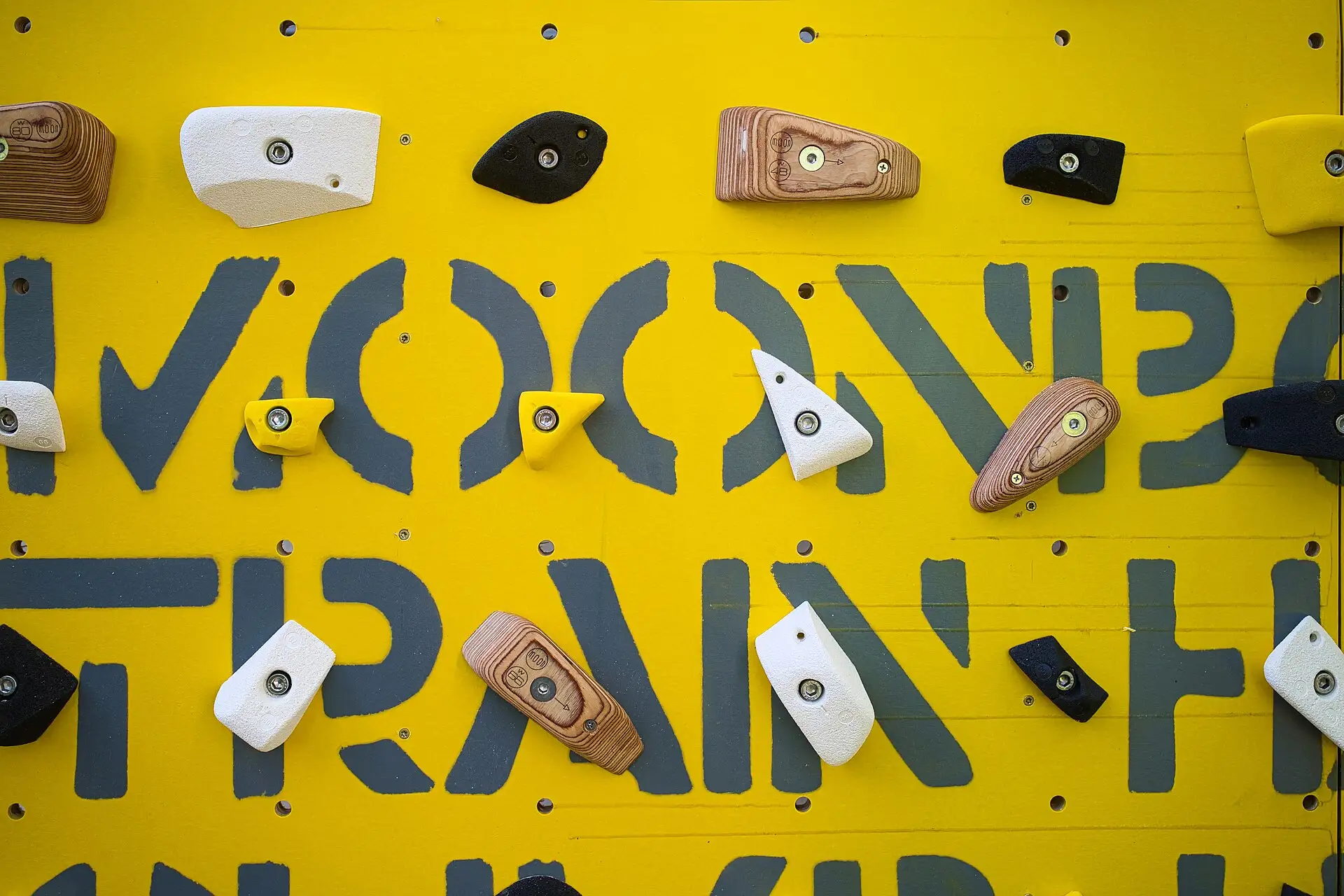
The angle is part of the grade
A board problem is the same holds at any angle, but not the same climb. Tip the wall further past vertical and more of your weight hangs from your hands, so a problem that's V5 at 25° climbs harder at 45°. On an adjustable board you can climb one problem at three angles in a session and log three different efforts.
If your log keeps the grade and drops the angle, a month at 25° and a month at 45° look the same. Keep both, and you can see whether you're getting stronger or just climbing shallower.
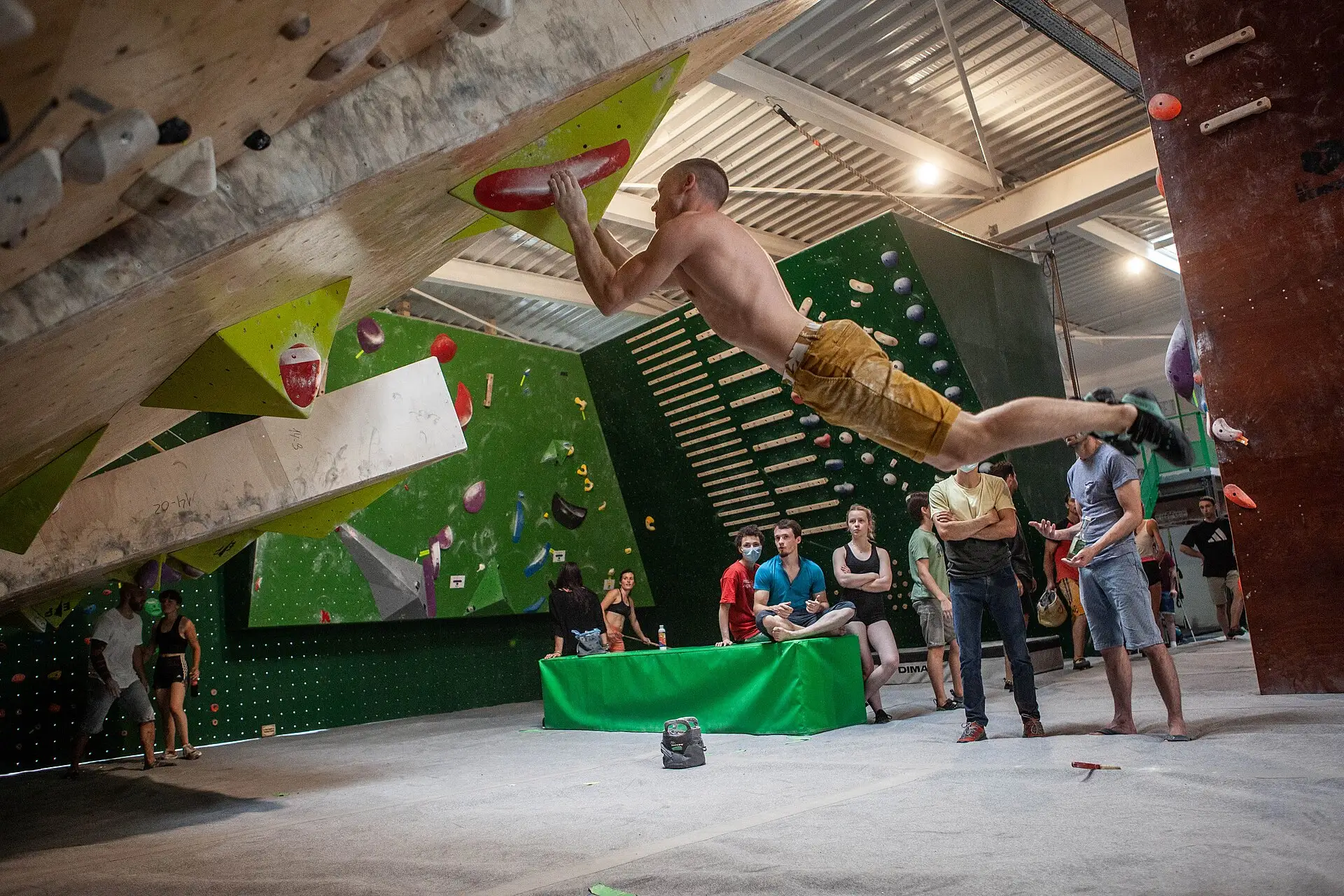
How each board sets its angle
| Board | Angle | What it means for your log |
|---|---|---|
| MoonBoard | Built at 25° or 40° (Moon Climbing). Each hold setup, from 2016 to 2024, goes on either angle (Moon Climbing). | A wall stays at its angle, so note which one you climbed when you travel between boards. |
| Kilter Board | Can sit on an adjustable frame; on Lemur's frame it moves electrically up to 70° (Lemur Design). | The angle can change between climbs, so it belongs to each climb, not to the board. |
| Tension Board 2 | Built on fixed walls and adjustable frames; Tension scales difficulty with angle (Tension Climbing, Climbing). | Check the gym's setting before your first climb and log what you climbed. |
Logging a board send in Ascent
- In the log sheet, switch from Gym to Board and pick the board.
- Set the angle. It moves in 5° steps from 10° to 70°, and opens at the angle of your last climb on that board, or 40° on a board you haven't logged yet.
- Tap the V grade, then how it went: Flash, 2nd go, Project with the number of tries, or Attempt only if you didn't send.
- Send. The board and angle stay put for the next climb; change the angle between any two climbs.
Board climbs log on the V scale and stay apart from any V gym, so a board V5 and a gym V5 never mix. Ascent doesn't control boards or light problems: keep using the board's own app to find and light a climb, then log what you did.
What the angle does afterwards
- Progress. Each board gets its own row with its main angle and your top V grade, so a jump in grade and a jump in angle both show.
- Medals. Your first send at 45°, 55° and 65° or steeper each earn a medal, on any board.
- Load. A board climb counts toward your week like a gym climb, weighed against your normal V grade for boards. How Load works.
- Share cards. A session share card names the board and angle, like "KilterBoard at 40°".
Which boards Ascent knows
Ascent comes with KilterBoard and TensionBoard 2, each on the V scale at any angle from 10° to 70°. MoonBoard isn't in Ascent's board list, so log your MoonBoard sends in Moon's own app.
Whichever board you climb, keep a copy of its logbook. When the original Kilter app went offline in March 2026, climbers had to ask for an export to get their history back (Climbing). How to back up your board logbook.